Medicare generally does not pay for ongoing custodial long-term care, such as help with bathing, dressing, eating, or supervision when those are the only services needed. It may cover limited,...
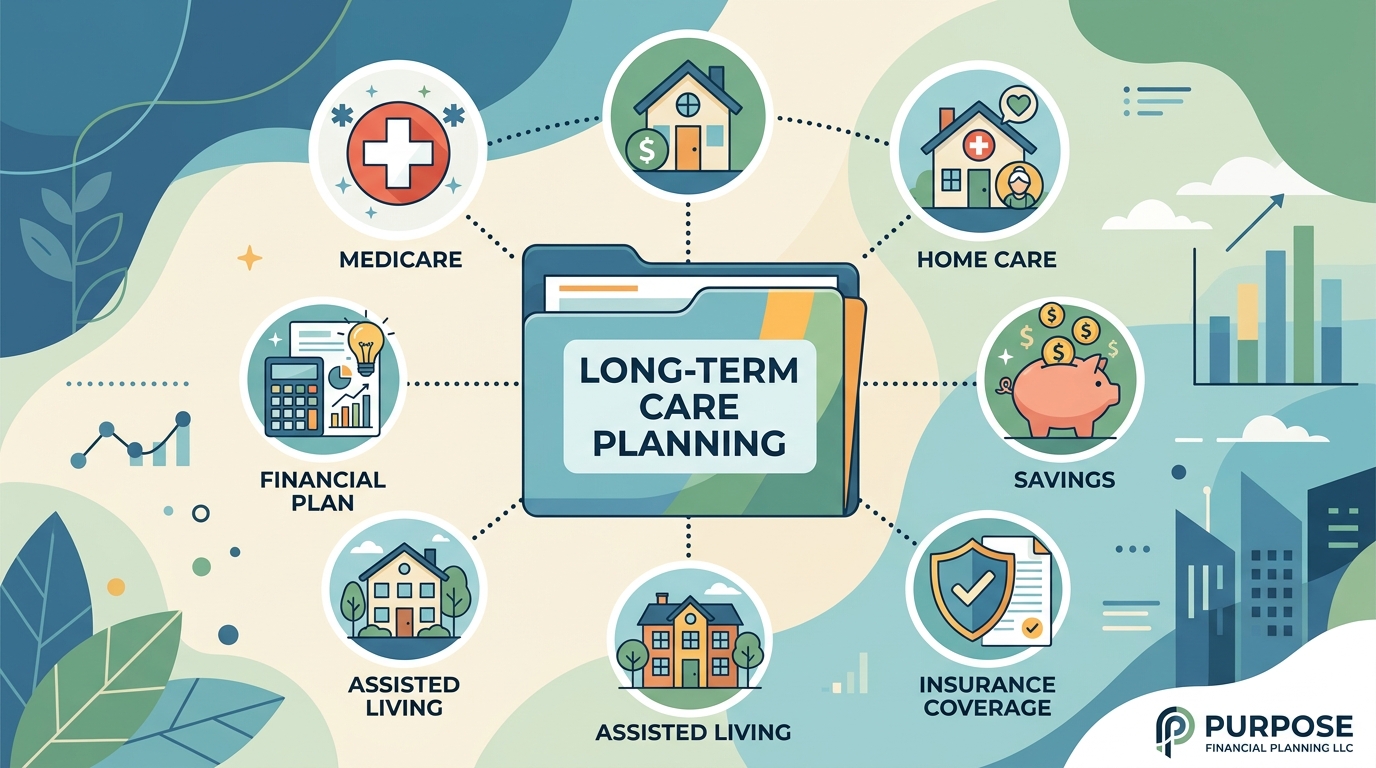
Medicare generally does not pay for ongoing custodial long-term care, such as help with bathing, dressing, eating, or supervision when those are the only services needed. It may cover limited, qualifying skilled care after a hospital stay, but that coverage is not designed to fund an extended stay in a nursing home or ongoing in-home personal care. Understanding the distinction early can help you build a more realistic plan for care costs in retirement.
For retirees and pre-retirees in Schaumburg and the northwest suburbs, long-term care planning is not only an insurance question. It is also a retirement-income, investment, estate-planning, and family decision. Purpose Financial Planning helps clients examine these moving parts through an education-first approach, so they can better understand the tradeoffs before choosing a path.
What Is Custodial Care?
Custodial care refers to assistance with activities of daily living. These may include bathing, dressing, toileting, transferring, eating, medication reminders, meal preparation, and supervision for safety. Care can be delivered at home, in an assisted living community, or in a nursing facility.
A person may need custodial care because of frailty, mobility limitations, cognitive decline, or a chronic condition. Importantly, the care does not have to involve a medical procedure. That is one reason it is often treated differently from skilled medical services under Medicare rules.
When Medicare May Cover Short-Term Skilled Care
Original Medicare may help cover certain short-term skilled nursing facility care or home health services when specific eligibility requirements are met. In general, coverage depends on factors such as a qualifying hospital stay, a physician’s involvement, a need for skilled nursing or therapy, and care provided by a Medicare-certified provider.
Examples can include rehabilitation after a hospitalization, physical therapy following an injury, or skilled nursing care related to a medical condition. Coverage rules, cost-sharing, duration limits, and eligibility requirements can change and depend on individual circumstances. Medicare Advantage plans may also have plan-specific rules. For those reasons, it is important to confirm benefits directly with Medicare, the plan administrator, or a qualified benefits professional before relying on coverage.
Why Extended Care Usually Falls Outside Medicare
Medicare is primarily health insurance, not a long-term care funding program. Once a person no longer needs daily skilled services but still requires ongoing help with everyday activities, Medicare coverage may be limited or unavailable for that custodial care.
This distinction can create a significant planning gap. A short rehabilitation period may be supported by Medicare under the right circumstances, while months or years of assistance in a home or care community may need to be funded from other sources. That is why the question is not simply whether Medicare covers long-term care, but how an extended care event could affect a household’s retirement cash flow, portfolio withdrawals, and legacy goals.
Using Personal Assets to Fund Care
Some households choose to self-fund potential care needs with personal assets. This may involve using savings, retirement distributions, investment accounts, home equity, or a dedicated reserve. Self-funding can offer flexibility, but it also requires a clear understanding of the potential impact on a retirement paycheck strategy.
For example, substantial unplanned withdrawals during a market decline could place added pressure on an investment portfolio. This is closely related to sequence-of-returns risk: withdrawals made after losses can reduce the assets available to participate in a future recovery. A coordinated retirement withdrawal strategy can help evaluate how a care event might affect income needs under different circumstances.
Traditional Long-Term Care Insurance
Traditional long-term care insurance is one possible way to transfer part of the financial risk of an extended care need. Policies may provide a pool of benefits for qualifying care at home, in assisted living, or in a nursing facility, subject to the policy’s terms, benefit triggers, waiting periods, premiums, exclusions, and other conditions.
This approach may appeal to people who want designated funds for care and prefer not to rely entirely on their portfolio. However, coverage and cost can vary widely based on age, health, benefit design, inflation features, and the insurer. A policy should be reviewed carefully in the context of the household’s broader financial plan rather than evaluated on a premium alone.
How Hybrid Long-Term Care Coverage May Differ
Hybrid long-term care insurance generally combines long-term care benefits with another form of insurance, often life insurance. Depending on the product design and terms, the policy may provide benefits for qualifying care and may also offer a death benefit if care benefits are not fully used.
For some families, this structure can be easier to understand because it may address more than one planning objective. It is not automatically the right solution for everyone. Funding method, liquidity needs, underwriting, benefits, guarantees, fees, and policy provisions all deserve careful review. Purpose Financial Planning can help clients organize the questions that matter and coordinate discussions with appropriate insurance and legal professionals when needed.
Coordinating Care Planning With Retirement and Estate Decisions
Extended care planning is most useful when it is connected to the rest of your financial life. Retirement income planning may help identify which accounts could be used first if care costs arise. Social Security planning may clarify how reliable income supports one spouse if the other requires care. Investment management and portfolio reviews can help assess whether the current asset allocation reflects both growth needs and possible liquidity demands.
Estate planning coordination matters as well. Beneficiary designations, powers of attorney, wills, trusts, and health care documents can affect who is authorized to make decisions and how assets are handled. A financial professional does not replace an attorney, tax professional, insurance carrier, or Medicare representative, but coordinated planning can help make sure important questions are addressed together.
Questions to Consider Before a Care Need Arises
- What level of monthly care cost could our retirement income reasonably absorb?
- How long could our assets support additional withdrawals?
- Would one spouse have sufficient income if the other needed substantial care?
- How might a care event affect our investment strategy and legacy plans?
- Do we have current powers of attorney and other estate planning documents in place?
- Should we explore traditional or hybrid long-term care insurance while options may still be available?
Long-Term Care Planning in Schaumburg and the Northwest Suburbs
At Purpose Financial Planning, we believe financial guidance should begin with education, not pressure. Our independent financial planning process helps individuals, families, and business owners in Schaumburg, Arlington Heights, Hoffman Estates, Barrington, Lake Zurich, Itasca, and nearby communities understand how potential care costs fit within a comprehensive financial plan.
Founded by Daniel Kaibel, CFP, Purpose Financial Planning brings more than 30 years of financial-services experience to retirement-focused planning conversations. We can help you evaluate scenarios, identify planning gaps, and connect long-term care considerations with retirement income, Social Security, investment management, and estate planning coordination. We do not promise that a particular strategy, policy, or benefit will cover every outcome; instead, we focus on helping you make informed decisions based on your priorities and circumstances.
FAQ
Does Medicare pay for long-term nursing home care?
Medicare generally does not pay for an extended nursing home stay when the primary need is custodial care. It may cover limited skilled nursing facility care when eligibility requirements are met, but it is not designed to pay for ongoing personal-care assistance.
Will Medicare cover help at home?
Medicare may cover certain qualifying home health services when skilled care is medically necessary and other requirements are satisfied. It typically does not provide ongoing coverage for personal care alone, such as help with bathing, dressing, or meal preparation. Confirm your specific benefits with Medicare or your plan provider.
Do I need long-term care insurance?
The answer depends on your health, age, assets, income, family circumstances, comfort with self-funding, and goals for retirement and legacy planning. Long-term care insurance can be one funding option, but it should be evaluated alongside personal assets and other available resources.
How can I pay for care without disrupting retirement income?
A coordinated plan can model potential care expenses alongside Social Security, pensions, portfolio withdrawals, cash reserves, and insurance options. The goal is not to predict every outcome, but to understand the tradeoffs and prepare a practical response before an urgent decision is required.
When should I begin long-term care planning?
It is often easier to explore options before a health event or immediate care need arises. Starting early can give you more time to understand possible costs, review insurance eligibility, update estate planning documents, and make care planning part of your broader retirement strategy.
If you would like a clearer view of how potential long-term care costs could fit into your retirement plan, Purpose Financial Planning invites you to review your options in a thoughtful, no-pressure conversation.
Our Services
About the Author
Daniel Kaibel is the founder of Purpose Financial Planning, an independent financial planning firm serving Schaumburg, Illinois and the surrounding northwest suburbs. With more than 30 years of financial services experience, Dan has built the firm around straightforward advice, personalized guidance, and helping clients make informed decisions with greater confidence.
At Purpose Financial Planning, Dan works with retirees, business owners, families, and individuals to coordinate retirement planning, investment management, Social Security strategies, and long-term financial goals. His approach is simple: understand what matters most to the client, explain options in plain language, and create a clear path forward so financial decisions feel less overwhelming and more manageable.