Creating a retirement paycheck means coordinating reliable income, portfolio withdrawals, cash reserves, required minimum distributions (RMDs), and taxes into one workable plan. For Schaumburg-area...
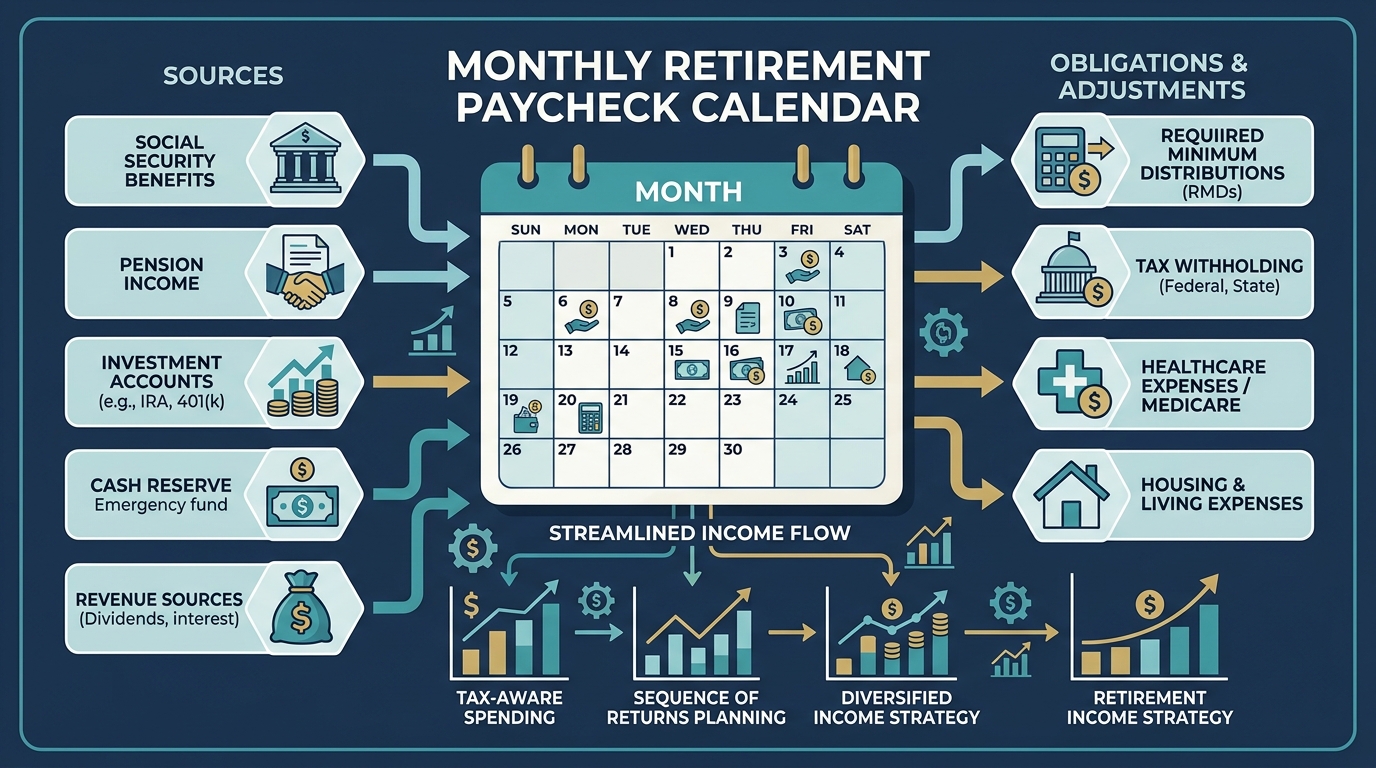
Creating a retirement paycheck means coordinating reliable income, portfolio withdrawals, cash reserves, required minimum distributions (RMDs), and taxes into one workable plan. For Schaumburg-area pre-retirees, the goal is not simply to replace a salary; it is to create a flexible income strategy that can support spending through changing markets, tax rules, and life circumstances. A thoughtful plan clarifies where each dollar may come from and when it may be most appropriate to use it.
At Purpose Financial Planning LLC, retirement income planning begins with education and practical cash-flow analysis. Instead of treating Social Security, pensions, and investments as separate decisions, we help clients see how they work together within a comprehensive financial plan.
Start With Your Retirement Spending Needs
A retirement paycheck strategy starts with a realistic estimate of expenses. Begin by separating essential costs from discretionary spending. Essential expenses may include housing, utilities, insurance premiums, groceries, transportation, health care, and debt payments. Discretionary spending may include travel, dining, gifts, hobbies, and home projects.
It is also important to account for expenses that may not occur every month. Property taxes, insurance renewals, vehicle repairs, charitable gifts, family support, and major home maintenance can create meaningful demands on cash flow. A plan should also consider how spending may change over time, particularly if health care or extended care needs arise later in retirement.
For many households in Schaumburg, Arlington Heights, Hoffman Estates, Barrington, Lake Zurich, and Itasca, a useful first question is: how much of our core spending can predictable income cover? The answer helps determine how much pressure the investment portfolio may need to absorb.
Coordinate Social Security and Pension Income
Social Security and pension payments can form the foundation of a retirement paycheck because they may provide recurring income that is less dependent on market performance. However, the timing and structure of these benefits deserve careful review.
Your Social Security claiming strategy affects the monthly benefit you receive for life. Claiming earlier can provide income sooner, while delaying may increase the benefit amount for eligible individuals. The appropriate choice depends on factors such as health, life expectancy, employment plans, marital status, other income sources, and the need for survivor protection. For married couples, Social Security spousal and survivor benefits can make coordination especially important.
If you have a pension, review its payment options carefully. A higher single-life payment may not provide income for a surviving spouse, while a joint-and-survivor option may reduce the current payment but continue benefits after the first spouse dies. These choices should be considered alongside insurance coverage, investment assets, and survivor income needs rather than in isolation.
Purpose Financial Planning helps clients compare Social Security claim timing and pension options in the context of their broader retirement income plan. Daniel Kaibel, CFP, RSSA, CLTC, CFSLA, brings more than 30 years of financial-services experience to these decisions, with a focus on helping clients understand the tradeoffs before they act.
Create a Purposeful Cash Reserve
Cash reserves can play an important role in retirement withdrawal planning. Retirees often keep a designated amount of readily available cash or short-term reserves for near-term spending, planned purchases, and unexpected costs. This reserve is not intended to replace a long-term investment strategy. Instead, it can reduce the need to sell long-term investments immediately after a market decline.
The appropriate reserve amount depends on the household’s spending needs, income sources, comfort with market fluctuations, and access to other liquid assets. Some retirees prefer to hold enough for several months of expenses, while others use a more structured reserve designed to cover one or more years of anticipated withdrawals. The right approach should reflect your specific situation and should be reviewed periodically.
Understand Sequence-of-Returns Risk
Sequence-of-returns risk refers to the danger of experiencing poor investment returns early in retirement while also taking withdrawals. Even if a portfolio’s long-term average return appears reasonable, the order in which positive and negative returns occur can affect how long the assets last.
For example, withdrawing from a declining portfolio may require selling more shares to generate the same amount of income. Those shares are no longer invested if markets recover, which can make it harder for the portfolio to regain ground. This does not mean retirees should avoid investing or attempt to predict every market movement. It means an investment and retirement planning strategy should account for the reality that markets do not rise in a straight line.
A diversified portfolio, appropriate asset allocation, a deliberate cash reserve, flexible discretionary spending, and regular portfolio reviews can all be parts of managing this risk. Purpose Financial Planning takes an education-first approach to investment management, helping clients connect investment decisions to the income their portfolio may need to provide.
Why Withdrawal Order Matters
Retirement accounts do not all receive the same tax treatment. Withdrawals from traditional IRAs and many workplace retirement accounts are generally taxable as ordinary income. Qualified withdrawals from Roth accounts may be tax-free, while withdrawals from taxable investment accounts can have different tax consequences depending on cost basis, dividends, interest, and realized gains.
Because of these differences, the order in which you draw from accounts can influence your annual tax bill, Medicare premium brackets, taxation of Social Security benefits, and the long-term flexibility of your plan. There is no universal withdrawal sequence that works for everyone. A plan that relies only on taxable accounts in one period and only on tax-deferred accounts later may overlook opportunities to manage income more deliberately.
Tax-aware retirement distribution planning may include coordinating withdrawals from different account types, evaluating Roth conversion opportunities where appropriate, and considering charitable giving strategies for eligible taxpayers. Tax laws and personal circumstances change, so these decisions should be reviewed with qualified tax and financial professionals.
Plan Ahead for Required Minimum Distributions
Required minimum distributions are withdrawals that generally must begin from certain tax-deferred retirement accounts at the age established by current law. RMDs are taxable income in most cases, and failing to take the required amount can result in significant penalties.
RMD planning should begin before the first required withdrawal. Waiting until distributions are mandatory can limit your choices, particularly if the RMD pushes income into a higher tax bracket or affects Medicare-related costs. Reviewing projected RMDs during the years between retirement and the required beginning age may reveal opportunities to spread taxable income more evenly over time.
For clients seeking retirement income planning in Schaumburg, Purpose Financial Planning can help organize projected distributions, Social Security, pensions, and investment withdrawals into a coordinated cash-flow framework. This work is designed to support informed decisions, not to provide tax or legal advice.
Review Your Plan as Life Changes
A retirement paycheck is not a one-time calculation. Markets change, spending evolves, tax rules may be updated, and family priorities can shift. Widowed spouses, changes in health, a new grandchild, a move, or a major purchase can all affect the plan.
Regular reviews provide an opportunity to revisit withdrawal rates, cash reserves, portfolio strategy, beneficiaries, estate planning coordination, and long-term care considerations. This ongoing process can help you respond thoughtfully rather than make rushed financial decisions during periods of uncertainty.
Questions to Review With a Financial Professional
- What level of monthly income will cover our essential expenses, and how much flexibility do we have in discretionary spending?
- When should each spouse claim Social Security, and how would different choices affect survivor income?
- How should pension elections fit our household’s income and legacy goals?
- How much cash should we hold for near-term withdrawals and unexpected expenses?
- Which accounts should we use first, and how could that withdrawal order affect taxes over time?
- When might RMDs begin, and how could they affect our tax bracket, Medicare premiums, and charitable giving plans?
- Does our current investment allocation support both long-term growth and near-term retirement income needs?
FAQ
What is a retirement paycheck strategy?
A retirement paycheck strategy is a coordinated plan for turning retirement resources into ongoing income. It may combine Social Security, pensions, investment withdrawals, cash reserves, and tax-aware distribution planning to help meet spending needs over time.
Should I take Social Security as soon as I retire?
Not necessarily. Retirement and Social Security claiming are separate decisions. The timing that makes sense depends on your income needs, health, life expectancy, marital situation, employment plans, and the potential value of a higher future benefit. A personalized analysis can clarify the tradeoffs.
How much cash should retirees keep on hand?
There is no single amount that fits every retiree. A suitable reserve depends on your spending, predictable income, investment mix, planned expenses, and comfort with market volatility. The purpose is to provide liquidity without placing more assets in cash than your long-term plan requires.
What is sequence-of-returns risk in retirement?
Sequence-of-returns risk is the risk that market declines early in retirement, combined with withdrawals, could reduce a portfolio more significantly than similar declines occurring later. Diversification, withdrawal flexibility, cash reserves, and ongoing reviews can help address this risk.
Why should I plan for RMDs before they start?
Planning ahead may give you more control over taxable income in the years before required distributions begin. It can also help you anticipate the potential effect of RMDs on taxes, Medicare premiums, and the amount of income your investment accounts need to produce.
Build a Retirement Income Plan With Greater Clarity
Retirement income decisions are interconnected, and small choices can have lasting effects on taxes, survivor income, and portfolio sustainability. Purpose Financial Planning LLC provides personalized financial planning, investment management, retirement income planning, and Social Security planning for clients in Schaumburg and the northwest suburbs.
If you are approaching retirement or already taking withdrawals, schedule a consultation with Purpose Financial Planning to discuss a clear, coordinated retirement paycheck strategy built around your goals.
Our Services
About the Author
Daniel Kaibel is the founder of Purpose Financial Planning, an independent financial planning firm serving Schaumburg, Illinois and the surrounding northwest suburbs. With more than 30 years of financial services experience, Dan has built the firm around straightforward advice, personalized guidance, and helping clients make informed decisions with greater confidence.
At Purpose Financial Planning, Dan works with retirees, business owners, families, and individuals to coordinate retirement planning, investment management, Social Security strategies, and long-term financial goals. His approach is simple: understand what matters most to the client, explain options in plain language, and create a clear path forward so financial decisions feel less overwhelming and more manageable.